

Schemes
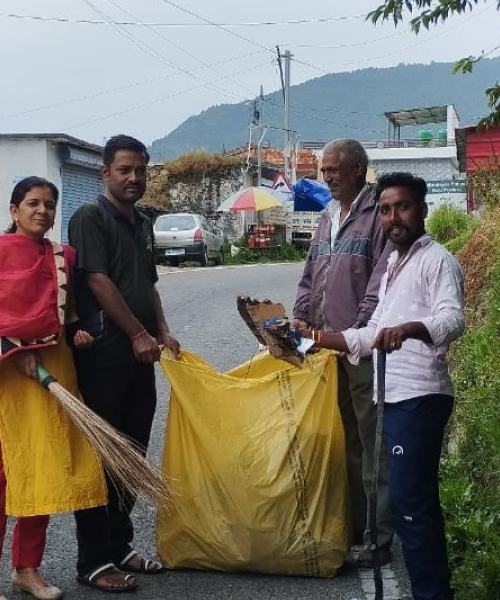
Swachh Bharat Mission (SBM)
The Swachh Bharat Mission (SBM), launched on October 2, 2014, is a nationwide initiative by the Government of India to achieve universal sanitation coverage, eliminate open defecation, and promote cleanliness across urban and rural areas.
Objectives:
i. Eliminate Open Defecation: Ensure access to individual household toilets.
ii. Solid Waste Management: Promote efficient waste segregation, collection, transportation, and
processing.
iii. Behavioural Change: Create awareness about hygiene and cleanliness.
iv. Clean Public Spaces: Maintain cleanliness in streets, markets, tourist spots, and workplaces.
Swachh Bharat Mission (Urban) Focus Areas
i. Urban waste Management Ensures efficient management of urban solid waste and . Urban sanitation.
ii. Public & Household Toilets – Promote construction & maintenance of public toilets and household toilets, especially for the urban poor.
iii. Swachh Bharat Mission 2.0 (2021-2026): The mission has been extended as Swachh Bharat Mission 2.0, with the following focus areas:
iv. Achieving ODF (Open Defecation Free) Plus status by sustaining ODF towns.
v. Strengtheing solid and liquid waste management systems.
vi. Special focus on plastic waste management and biodegradable waste composting.
vii. Used water Management:- Used Water Management (UWM) is a critical component of Swachh Bharat Mission (SBM) 2.0, aimed at managing and treating wastewater in urban areas to ensure environmental sustainability and public health. It focuses on the proper treatment, reuse, and disposal of used water (including greywater and blackwater) to prevent water pollution and resource wastage.
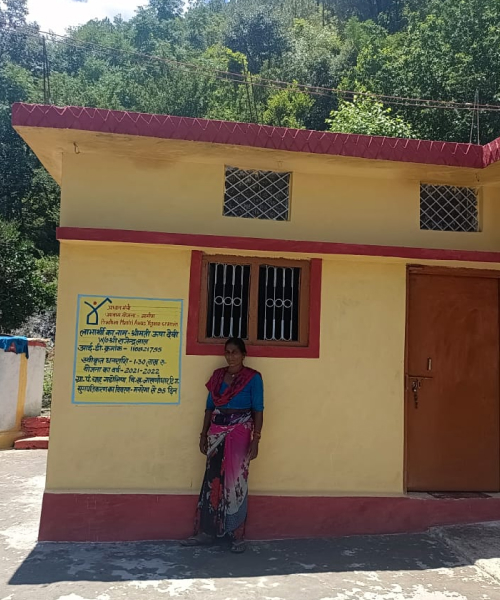
Pradhan Mantri Awas Yojana – Urban
Pradhan Mantri Awas Yojana (Urban). It is a flagship housing scheme launched by the Government of India in 2015 to provide affordable housing to the urban poor, including economically weaker sections (EWS), low-income groups (LIG), and middle-income groups (MIG).
Key Features:
i. Objective: Achieve “Housing for All” by 2022, extending until Dec. 2025.
ii. Focus: Provide pucca houses with basic amenities.
iii. Implementation:
a. In-Situ Slum Redevelopment
b. Credit-Linked Subsidy Scheme (CLSS)
c. Affordable Housing in Partnership (AHP)
d. Beneficiary-Led Individual House Construction or Enhancement (BLC)
iv. Target Beneficiaries: Urban poor, including slum dwellers.
v. Subsidies: Interest subsidies on home loans for eligible groups. The Mission covers the entire urban area consisting of Statutory Towns, Notified Planning
Areas, Development Authorities, Special Area Development Authorities, Industrial Development Authorities or any other authority under State legislation which is entrusted with the functions of urban planning & regulations. Beneficiary will get benefit from one of above four component.
vi. The Pradhan Mantri Awas Yojana (Urban) has been upgraded to PMAY-U 2.0, aiming to provide affordable housing to urban poor and middle-class families in India. This phase, effective from September 1, 2024, focuses on constructing 1 crore new houses over five years. Key Features of PMAY-U 2.0:
vii. Beneficiary-Led Construction (BLC): Assists individuals in constructing their own homes.
viii. Affordable Housing in Partnership (AHP): Collaborates with private developers to provide affordable housing options.
ix. Affordable Rental Housing (ARH): Introduces rental housing solutions to benefit the migrant population and working poor.
x. Interest Subsidy Scheme (ISS): Offers interest subsidies on housing loans for eligible beneficiaries.
xi. The scheme emphasizes convergence with other government initiatives like the Smart Cities Mission and Swachh Bharat Mission to ensure comprehensive development. Online applications for PMAY-U 2.0 are now open. Eligible individuals can apply through the official PMAY-U website or contact their Urban Local bodies (ULBs) or authorized Common Service Centers (CSCs) For detailed guidelines and application procedures, please refer to the official PMAY-U 2.0 guidelines.
https://pmay-urban.gov.in/pmay-u-2.0-guidelines
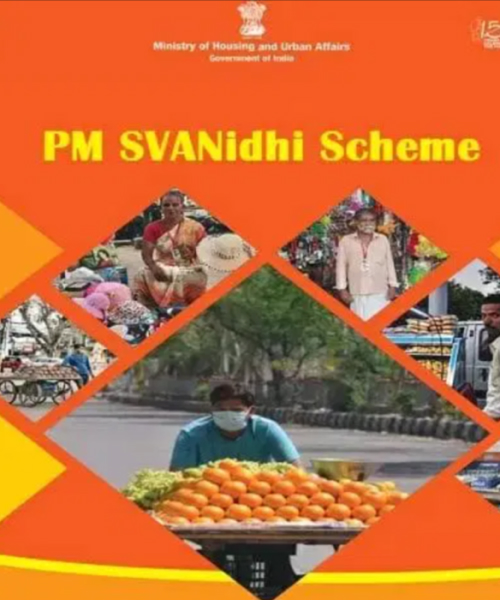
PM SVANidhi
The Pradhan Mantri Street Vendor’s AtmaNirbhar Nidhi (PM SVANidhi) scheme has significantly impacted the lives of street vendors in Uttarakhand, fostering financial inclusion and digital literacy. Launched on June 1, 2020, the scheme provides collateral-free working capital loans to street vendors, aiding them in revitalizing their businesses post the COVID-19 pandemic.
Implementation in Uttarakhand:
i. Loan Disbursement: As of July 2025, over 56,840 street vendors in Uttarakhand applied for loans through the online portal. In the first phase, loans of ₹10,000 were approved for more than 28,597 applicants. In the second phase, loans of ₹20,000 were sanctioned for approximately 11,802 applicants, and in the third phase, loans of ₹50,000 were approved for about 3028 applicants. Collectively, loans totaling₹65.61 crore have been disbursed to over 42,790 street vendors across all three phases.
ii. Interest Subsidy: Beneficiaries receive a 7% interest subsidy from the central government and an additional 2% from the state government, effectively reducing the interest burden. Furthermore, the Uttarakhand government plans to cover the remaining 3-4% interest, ensuring that beneficiaries can access loans at minimal or no interest cost.
iii. Digital Transactions: Under the ‘Main Bhi Digital’ campaign, approximately 18,525 (65%) street vendors were provided with QR codes through banks, promoting digital transactions and enhancing digital literacy among vendors.
vi. Comprehensive Welfare: The ‘SVANidhi Se Samridhi’ initiative integrates beneficiaries and their families with eight central government welfare schemes, including One Nation One Ration Card, Janani Suraksha, Matru-Vandan, Suraksha Bima, Jan Dhan, Jeevan-Jyoti Bima, and Shram-Yogi Maandhan Yojana. Approximately 25,428 eligible hawkers and their relatives from 36 urban bodies in the state have benefited from these schemes. Uttarakhand Chief Minister Pushkar Singh Dhami has praised the PM SVANidhi scheme for initiating a new wave of financial inclusion and digital literacy in urban areas, stating that it
has restored self employment, self-reliance, self-respect, and self confidence among street vendors. Overall, the PM SVANidhi scheme has played a pivotal role in empowering street vendors in Uttarakhand, providing them with financial support, promoting digital transactions, and integrating them into broader social welfare initiatives.
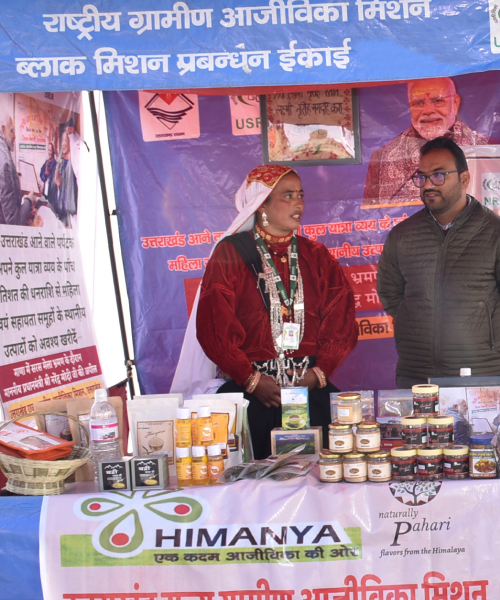
Deendayal Antyodaya Yojana – National Urban Livelihood Mission (DAY-NULM)
The National Urban Livelihoods Mission (NULM) is a Government of India initiative aimed at reducing poverty and vulnerability among the urban poor by enabling them to access gainful self-employment and skilled wage employment opportunities. In Uttarakhand, the Urban Development Directorate oversees the implementation of NULM, focusing on several key components:
Objectives
i. To reduce poverty and vulnerability of the urban poor households by enabling them to access
self-employment and skilled wage employment opportunities.
ii. To provide shelter equipped with essential services to the urban homeless.
iii. The mission aims to address the livelihood concerns of the urban street vendors
Components:
i. Self-Employment Programmer (SEP) – SEP supports individual and group enterprises by facilitating access to subsidized loans. Individual enterprises can avail loans up to ₹2 lakh, while group enterprises can access up to ₹10 lakh. The program offers an interest subsidy to ensure a 7% rate on these loans, subject to timely repayment. It also facilitates linkage with the Credit Guarantee Fund Scheme of the Credit Guarantee Fund Trust for Micro and Small Enterprises (CGTMSE) and provides support for credit cards to individual entrepreneurs for working capital requirements.
ii. Social Mobilization & Institution Development (SM&ID) – This involves organizing urban poor into Self-Help Groups (SHGs), Area Level Federations (ALFs), and City Level Federations (CLFs) to empower them through capacity building and training. Resource Organizations (ROs) are engaged to facilitate the formation and development of these groups, with a maximum expenditure of ₹10,000 per SHG. Additionally, Revolving Fund Support of ₹10,000 for SHGs and ₹50,000 for ALFs is provided. City Livelihoods Centres (CLCs) are established to bridge the gap between the demand and supply of goods and services produced by the urban poor.</p.
iii. Shelters for Urban Homeless (SUH) – SUH aims to provide permanent, 24×7 all-weather community shelters for the urban homeless. For every 1 lakh urban population, shelters catering to 50-100 persons are established, equipped with essential infrastructural facilities like kitchens, water, sanitation, electricity, and recreation. The construction cost is shared between the central and state governments in a 90:10 ratio, with the state providing land as their contribution.</p.
iv. Support to Urban Street Vendors (SUSV) – His component aims to address the livelihood concerns of urban street vendors by facilitating access to suitable spaces, institutional credit, social security, and skills. Activities include conducting city-wide street vendor surveys, issuing ID cards, developing City Street Vending Plans, and providing bank linkages, skill development, and social security convergence.In addition to these components, financial institutions like the Uttarakhand Gramin Bank play a crucial role in supporting NULM by offering financial products tailored to the needs of the urban poor. The bank provides lowmargin, low-processing-charge loans with attractive interest rates, starting with –.–%*, to individual and group enterprises under NULM. The eligibility criteria include being an urban poor individual desiring to set up an enterprise or being part of a group of at least five members, with a minimum of 70% belonging to urban poor families. The bank offers flexible repayment options ranging from 60 to 84 months and provides both cash credit and term loan facilities, with loan amounts up to ₹2 lakh for individuals and ₹10 lakh for groups. Through these concerted efforts, NULM in Uttarakhand aims to uplift the urban poor by providing them with the necessary skills, financial support, and institutional backing to improve their livelihoods sustainably .